UK Native Pond Snails and Swan Mussels
UK Greater Ramshorn Snails (Planorbarius corneus)
UK Greater Ramshorn Snails (Planorbarius corneus)
Couldn't load pickup availability
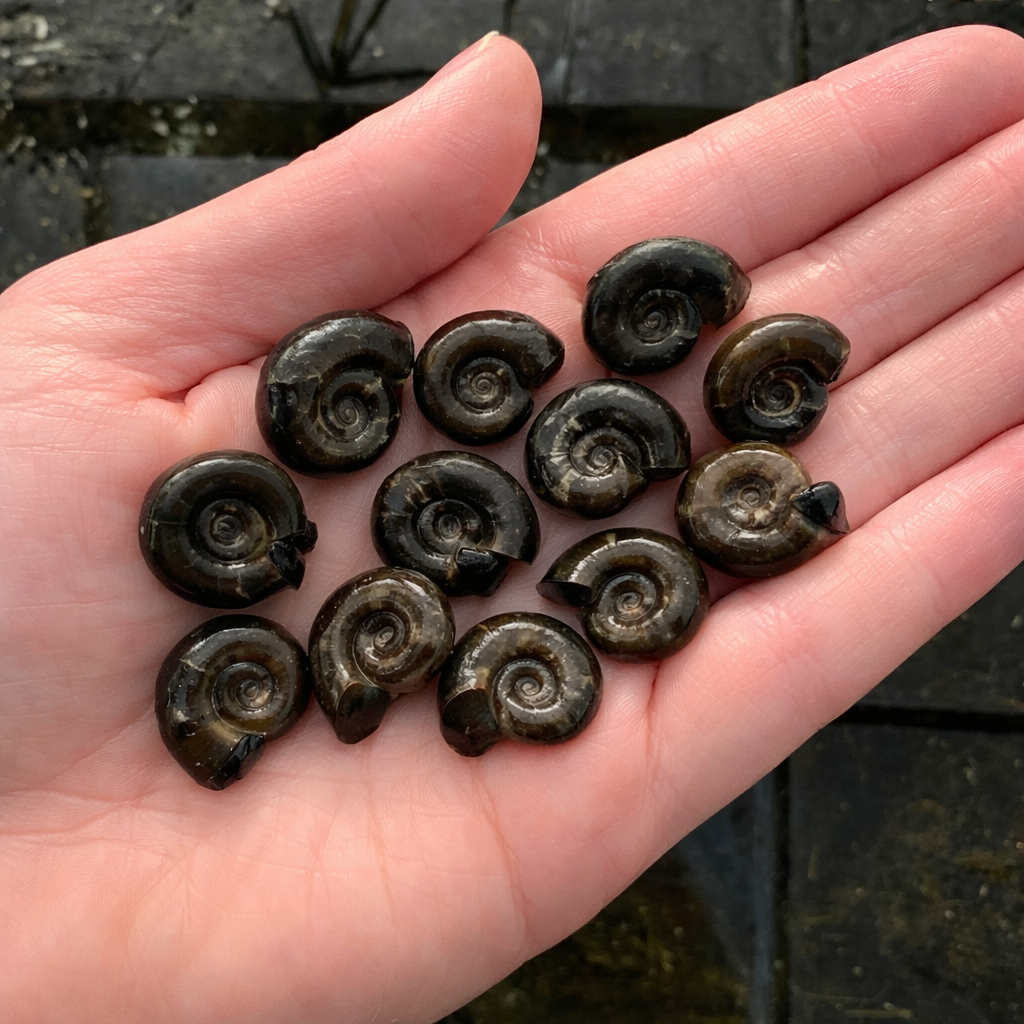
Ramshorn Snail-(Planorbids corneus) UK Native 🇬🇧
Your snails will be a minimum of 12mm 1/2" If any smaller we will send 2 for 1.
Great time to add to your pond in colder temperatures
Planorbarius corneus is the largest European species of Ramshorn snail (family Planorbidae), with a shell typically measuring 35 millimetres (1.4 in) across when fully-grow.
Allow 5-10 snails per m²
Key characteristics
- A very large, dark, coiled shell
- Flattened on the underside but spire recessed on the upper side
- Whorls completely rounded with deep sutures
- Glossy brownish on the upper side, lighter, more olive-brown, on the underside, though often covered with dark brown, matt deposits
- Mouth wide and almost circular
- Growth lines coarse and irregular
The Ramshorn (Planorbis Corneus) is a relatively large species of air-breathing freshwater snail. Perfect for both fresh water tanks and all sizes of ponds, they feed on algae and enjoy ponds with high levels of calcium.
As a useful guide we recommend 5 snails per m².
These lay small clusters of 12 to 40 eggs at a time on glass ,rock and leaves ,while it is a common belief that snails will over populate your pond or aquarium, this will only happen if there is a surplus of uneaten food and can be a good indication of over feeding.
Snails Manage Algae
Ramshorn snails go around the edges of your pond / Tank; they eat algae off the bottom, rocks, and sides. Ramshorn snails are also friendly to plants, meaning they will clean the stems and leaves without eating or damaging the actual plant. Indeed, they will only eat decaying plants. Colours vary but normally dark in colour.
Furthermore, Ramshorn snails are careful when it comes to grazing algae of a plant. Indeed, many are found of Ramshorn snails because they do not harm the plants in the pond; they merely scavenge around the stems and edges whilst only actively feeding on decaying plants.
Snails Reduce Levels Of Ammonia
Ammonia is an invisible killer for your pond / Tank. It is highly toxic and harmful to your fish. As such, it is better not to leave this hazard unchecked. But how does ammonia even enter your pond / Tank, to begin with?
In short, ammonia, a compound made of nitrogen and hydrogen, is released into the pond through waste. More specifically, it is spread through the breakdown of organic material. This includes various forms of waste and dirt, such as fish excrement, leftover food, dead plants, and decaying algae.
The Nitrogen Cycle
The Nitrogen cycle refers to the process that transforms ammonia into nitrate, which is eventually used to grow plants in your tank. However, a high level of nitrate in your pond will be harmful to the fish. Therefore, it is advised to clean the water and reduce the amount of nitrate in your pond.
As snails assist in reducing waste, thereby cleaning water overall, they indeed are a plus when it comes to safeguarding a healthy nitrogen cycle. Although snails can surely not take up the job themselves, they are natural and convenient little helpers nonetheless.
Share